Appearance
Vibrato
Vibrato module adds periodic modulation to the frequency of the sound, creating a wobbling effect. This effect is commonly used in musical instruments and sound effects to add expressiveness and variation to the sound.
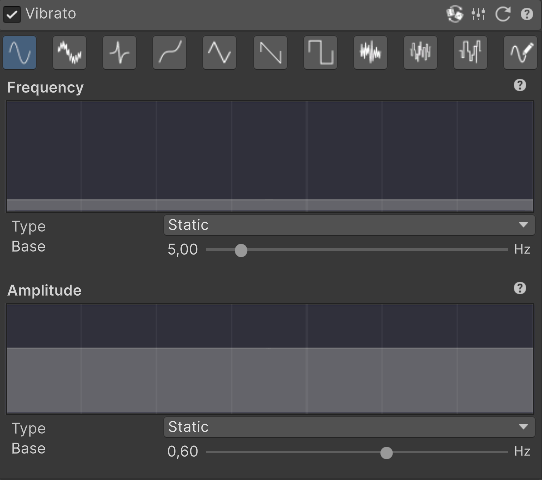
Parameters
- Waveform: The waveform shape used for the vibrato effect. Options include Sine, Square, Triangle, Saw, and Noise. Different waveforms produce different tonal characteristics in the vibrato effect.
- Frequency: The speed of the vibrato effect in Hertz (Hz). This determines how fast the pitch oscillates.
- Amplitude: The intensity of the vibrato effect as a percentage of the current frequency. This determines how much the pitch varies.
Example usage
- A low Frequency vibrato will create a wobbly effects, like alarms or spooky ghost sounds.
- Medium Frequency vibrato can be useful for creating electronic sounds, like sirens, sci-fi shields or engines.
- Very high Frequency vibrato can be useful for creating shimmering or metallic effects, like bells, chimes or even engine buzzing.
- Falling down Frequency can make a "dying" or "fading" sound effect for broken machines, robots, etc.
- Using Square wave creates a phone ringing or electronic beeping effects.
- Using Noise wave (like White Noise) and high Frequency can create a machine or bell effect.
- Use high Amplitude values for powerups, buffs, magic effects, etc.